

Tirzepatide is an injectable peptide solution used for weight loss. Administered subcutaneously, it is part of a new class of drugs recently approved by the FDA. Designed to help individuals with type 2 diabetes regulate blood sugar levels, it also supports weight reduction. Its effects and potential side effects are similar to those observed with medications such as Ozempic.
What Is Tirzepatide
Tirzepatide acts as an agonist for GLP-1 and GIP receptors, mimicking the effects of glucagon-like peptide 1 (GLP-1) and glucose-dependent insulinotropic polypeptide (GIP). [1] These hormones, released in the gut after consuming sugar, are essential for regulating blood sugar levels. [1] Although the FDA primarily approved Mounjaro for managing type 2 diabetes and controlling blood sugar, it has also shown significant promise in supporting weight loss. Some healthcare providers prescribe it off-label for this purpose, despite it not having official FDA approval for weight loss.
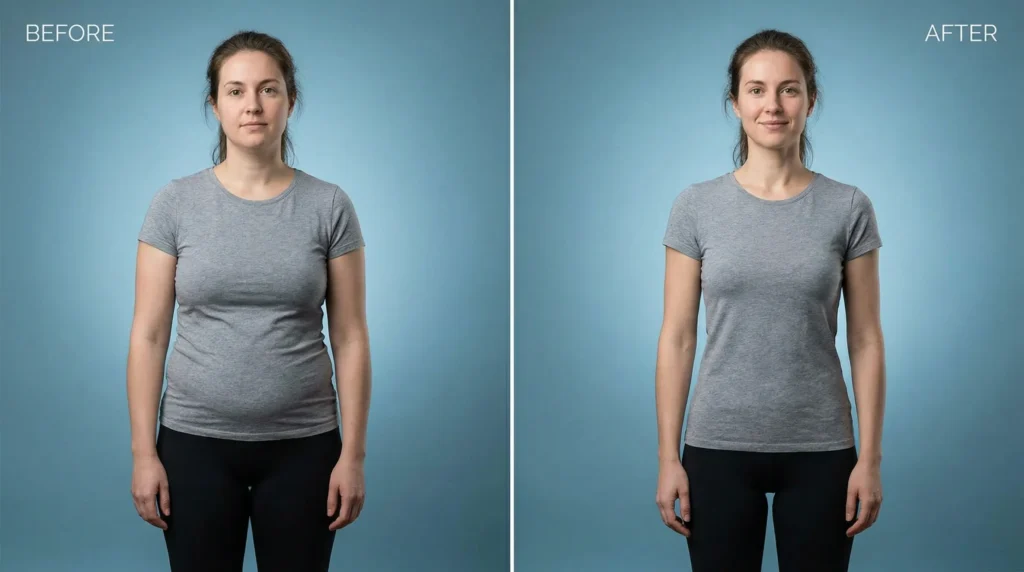
The effectiveness of Tirzepatide in promoting weight loss has been confirmed through clinical trials. A 2024 study involving obese participants without diabetes found that weekly injections of Tirzepatide at different doses resulted in significant weight loss. [2] Participants receiving Tirzepatide experienced a reduction in body weight ranging from 15% to 21% over 72 weeks, depending on the dose given. [2]

How Does Tirzepatide Work For Weight Loss
Tirzepatide promotes weight loss by mimicking the actions of satiety hormones GIP and GLP-1, which are naturally released by the intestine. By acting as an agonist to these hormones, Tirzepatide helps manage appetite and create a feeling of fullness after eating, which leads to reduced food intake and greater satiety. [1]
When administered, Tirzepatide slows down digestion, aiding in portion control and hunger management. [3] By delaying stomach emptying and slowing nutrient absorption, it helps individuals feel satisfied and stay full longer. Additionally, Tirzepatide affects specific brain regions, such as the hypothalamus, which plays a key role in regulating appetite and influencing eating behaviors. [4] By targeting these areas, Tirzepatide helps control appetite, manage cravings, and encourage healthier food choices. However, results may vary, and it’s essential to follow a well-rounded weight loss plan that includes a balanced diet, regular exercise, and lifestyle adjustments for the best outcomes.
Clinical Studies
In 2022, a phase 3 randomized, controlled clinical trial revealed that Tirzepatide resulted in a 20% reduction in body weight over 72 weeks. These findings led to the U.S. Food and Drug Administration (FDA) approving the peptide under the trade name Zepbound® for weight loss in individuals with a body mass index (BMI) of 30 or higher, or for those with a BMI of 27 or greater who also had health conditions like high cholesterol or hypertension.
While the initial weight loss results were significant, researchers were uncertain if the effects would last after the treatment period ended. In order to investigate this, they started the SURMOUNT-4 study, which ran from March 2021 to May 2023 at 70 sites in Argentina, Brazil, Taiwan, and the United States. [5] Participants received the maximum tolerated dose of Tirzepatide for 36 weeks, achieving an average weight reduction of 20.9%, along with improvements in blood pressure, blood sugar levels, and lipid profiles. [5]
Following this period, 670 eligible participants were randomly assigned to either continue Tirzepatide for another year (52 weeks) or switch to a placebo. Those who remained on tirzepatide lost an additional 5.5%, while the placebo group regained 14% of their lost weight. Although the placebo group was still nearly 10% lighter than their starting weight, the improvements in cardiometabolic risk factors had reversed. In contrast, participants continuing with Tirzepatide showed significant improvements in BMI, lipid levels, diabetes markers, and blood pressure compared to the placebo group. [5]
How Is Tirzepatide Used
Always follow the instructions provided on your prescription label, and consult your healthcare provider if you have any questions. It’s important to use Tirzepatide exactly as directed, without adjusting the dose or frequency on your own.
Tirzepatide is typically administered once a week and can be taken with or without food, at any time of the day. The injection is usually given in the thigh, abdomen, or upper arm. It’s advisable to rotate the injection sites with each dose to minimize the risk of pain and swelling. You can change the day of the week you administer Tirzepatide, as long as there is at least a three-day gap between doses.
Keep in mind that while Tirzepatide helps manage type 2 diabetes, it does not cure the condition. It may take four weeks or more to experience the full effects of the medication.
Potential Risks of Tirzepatide Use
Before starting Tirzepatide, reviewing your medical history with your healthcare provider is important. The peptide’s interactions with your health conditions or other factors may affect its suitability for you. Consider the following:
-
- Allergic Reactions: If you’ve previously had a negative reaction to Tirzepatide, your doctor may suggest alternative medications that better fit your needs.
-
- Diabetic Retinopathy: If you have diabetic retinopathy, or a diabetes-related vision issue, inform your doctor. Tirzepatide might temporarily worsen this condition, especially early in treatment.
-
- Digestive Problems: Common side effects of Tirzepatide include constipation, diarrhea, and other digestive issues.
-
- Pancreatitis: Tirzepatide injections may cause pancreatitis, which is marked by inflammation and swelling of the pancreas.
Common Side Effects
Like other medications, Tirzepatide can cause side effects, varying in severity and frequency. [6] Most are temporary and typically resolve within a few days to weeks. However, if you experience persistent, bothersome, or severe side effects, consulting your healthcare provider is strongly advised. Based on clinical trial feedback, commonly observed side effects include:
-
- Nausea
-
- Diarrhea
-
- Decreased appetite
-
- Constipation
-
- Hypoglycemia
-
- Vomiting
In order to avoid serious side effects, consider dividing the doses across the week. Some people take microdoses of Tirzepatide daily, ensuring they stay within the upper weekly limit. If the current dosage is effective, there’s no need to increase it. It’s advisable to aim for the minimal effective dose, starting low and gradually increasing if necessary.
The Dosage
The dosage of Tirzepatide varies based on the intended use. For weight loss, the recommended starting dose is 1.75 – 2.5 mg, administered via injection once a week. After 4 weeks, if the medication is well tolerated, the dose can be increased to 5 mg. If necessary, the dosage may be further increased every 4 weeks in increments of 2.5 mg, with a maximum dose of 15 mg per week.
For managing Type 2 diabetes, the approach is similar. Begin with a 2.5 mg dose, gradually increasing every 4 weeks. It’s important to note that the initial 2.5 mg dose serves primarily as an introductory treatment and is not intended to control blood sugar levels. If needed, the day of weekly administration can be adjusted, provided there is at least a 3-day (72-hour) interval between doses.
Comparing Tirzepatide with Other Drugs
Tirzepatide has shown superior efficacy compared to other weight-loss and diabetes medications, such as semaglutide. Its dual action on GLP-1 and GIP receptors sets it apart, offering enhanced benefits in weight reduction and metabolic health.
Key Comparisons
- Tirzepatide vs. Semaglutide: Clinical trials demonstrate that tirzepatide achieves greater weight loss and better blood sugar control. [7]
- Broader Applications: Unlike single-action drugs, tirzepatide addresses multiple pathways, making it effective for diverse patient needs. [7]
Eli Lilly’s innovative approach has positioned tirzepatide as a leader in the weight loss and diabetes treatment market.
Tirzepatide vs Semaglutide For Weight Loss
Semaglutide and Tirzepatide are both medications approved by the FDA to assist with chronic weight management for eligible individuals. Ongoing research continues to compare these medications, particularly in terms of their effectiveness in promoting weight loss. [7]
A recent study aimed to compare the effectiveness of semaglutide and Tirzepatide, specifically for individuals with type 2 diabetes. The researchers conducted a propensity-matched cohort study, involving participants who were new users of either Tirzepatide or semaglutide and who were also dealing with obesity or being overweight. [7]
The study gathered data from electronic health records and linked third-party information, tracking changes in participants’ body weight at three months, six months, and one year. A total of 18,386 participants were included in the propensity score-matched cohort, with 52% having type 2 diabetes and an average age of 52. The average follow-up period was 165 days, with just over half of the participants discontinuing each medication during the study. The researchers also monitored gastrointestinal side effects and found similar risks between the two medication groups. [7]
Overall, the study concluded that Tirzepatide was more effective in promoting weight loss. About 82% of participants taking Tirzepatide achieved a weight loss of 5% or more, compared to 66.5% of participants taking Semaglutide who reached this level of weight loss. [7]
Tirzepatide in FDA-Approved Uses
The FDA has approved tirzepatide for the treatment of type 2 diabetes as well as chronic weight management with ongoing evaluations for its weight-loss applications. Patients receiving tirzepatide for diabetes often report significant weight loss as a secondary benefit, further supporting its potential for obesity management.
Current Approvals
- Type 2 Diabetes: Approved as a first-line treatment to improve blood sugar control.
- Chronic Weight Management: Approved as a treatment option for chronic weight management in adults who are overweight or obese with at least 1 weight-related health condition.
The FDA’s approval underscores tirzepatide’s safety profile and its promising role in addressing metabolic conditions.
Closing Thoughts
Tirzepatide stands out as a promising option for managing weight loss and type 2 diabetes. By acting as a dual agonist for GLP-1 and GIP receptors, it uniquely targets both obesity and glucose control, making it an effective tool in addressing these health challenges. Clinical trials have demonstrated its capability to support significant weight loss, highlighting its potential in tackling obesity-related issues.
References
[1] Nauck MA, D'Alessio DA. Tirzepatide, a dual GIP/GLP-1 receptor co-agonist for the treatment of type 2 diabetes with unmatched effectiveness regrading glycaemic control and body weight reduction. Cardiovasc Diabetol. 2022 Sep 1;21(1):169. doi: 10.1186/s12933-022-01604-7. PMID: 36050763; PMCID: PMC9438179.
[2] Jastreboff AM, le Roux CW, Stefanski A, Aronne LJ, Halpern B, Wharton S, Wilding JPH, Perreault L, Zhang S, Battula R, Bunck MC, Ahmad NN, Jouravskaya I; SURMOUNT-1 Investigators. Tirzepatide for Obesity Treatment and Diabetes Prevention. N Engl J Med. 2024 Nov 13. doi: 10.1056/NEJMoa2410819. Epub ahead of print. PMID: 39536238.
[3] Forzano, I., Varzideh, F., Avvisato, R., Jankauskas, S. S., Mone, P., & Santulli, G. (2022). Tirzepatide: A Systematic Update. International Journal of Molecular Sciences, 23(23), 14631. https://doi.org/10.3390/ijms232314631
[4] Zaffina I, Pelle MC, Armentaro G, Giofrè F, Cassano V, Sciacqua A, Arturi F. Effect of dual glucose-dependent insulinotropic peptide/glucagon-like peptide-1 receptor agonist on weight loss in subjects with obesity. Front Endocrinol (Lausanne). 2023 Feb 22;14:1095753. doi: 10.3389/fendo.2023.1095753. PMID: 36909312; PMCID: PMC9992880.
[5] Aronne LJ, Sattar N, Horn DB, Bays HE, Wharton S, Lin WY, Ahmad NN, Zhang S, Liao R, Bunck MC, Jouravskaya I, Murphy MA; SURMOUNT-4 Investigators. Continued Treatment With Tirzepatide for Maintenance of Weight Reduction in Adults With Obesity: The SURMOUNT-4 Randomized Clinical Trial. JAMA. 2024 Jan 2;331(1):38-48. doi: 10.1001/jama.2023.24945. PMID: 38078870; PMCID: PMC10714284.
[6] Mueller (Sabato), Leah, and Beth Johnston. "Mounjaro (tirzepatide) - Uses, Side Effects, and More." Medically reviewed, 24 July 2024.
[7] Rodriguez PJ, Goodwin Cartwright BM, Gratzl S, et al. Semaglutide vs Tirzepatide for Weight Loss in Adults With Overweight or Obesity. JAMA Intern Med. 2024;184(9):1056–1064. doi:10.1001/jamainternmed.2024.2525